E-Commerce / WordPress / Shopify
Kynesius
A custom WordPress theme governing two brands from a single install — headless Shopify cart, advertorial conversion pages, and a printable resources hub. No page builders, no WooCommerce, no compromises.
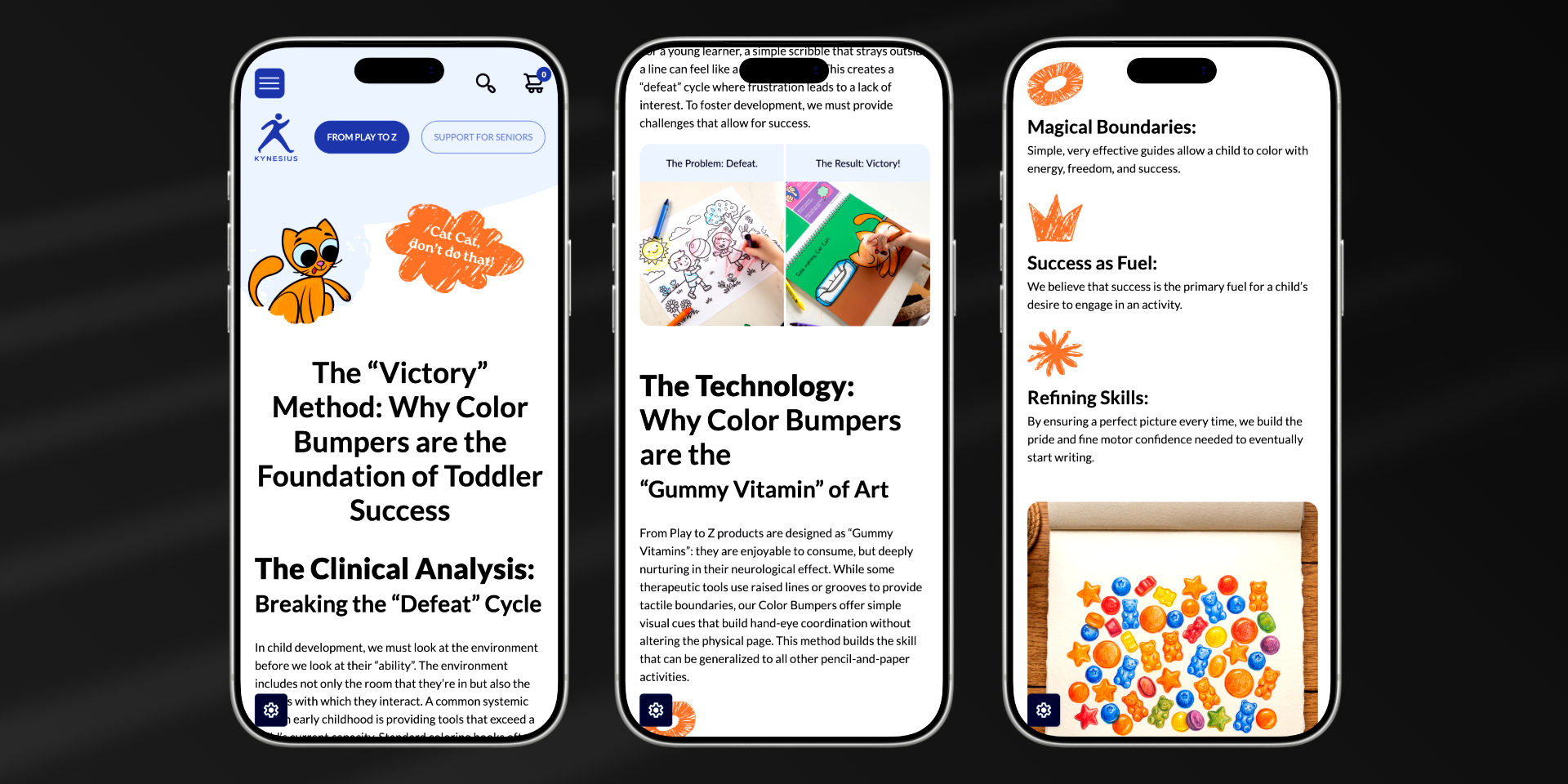
The Challenge
Kynesius operated two distinct brands — Kynesius and FPTZ (From Play to Z) — that needed separate visual identities, menus, and content logic, yet managed from a single WordPress install. On top of that, they needed a fully custom e-commerce experience without WooCommerce: Shopify handling payments and inventory, WordPress controlling every pixel of the purchase flow.
Debrief
Kynesius operated two distinct brands — Kynesius, the parent corporate identity, and FPTZ (From Play to Z), the consumer-facing brand — that needed separate visual identities, separate menus, and entirely different content logic. The brief was to govern both from a single WordPress install, with no shared styling bleeding across brand lines and no duplicated codebase to maintain.
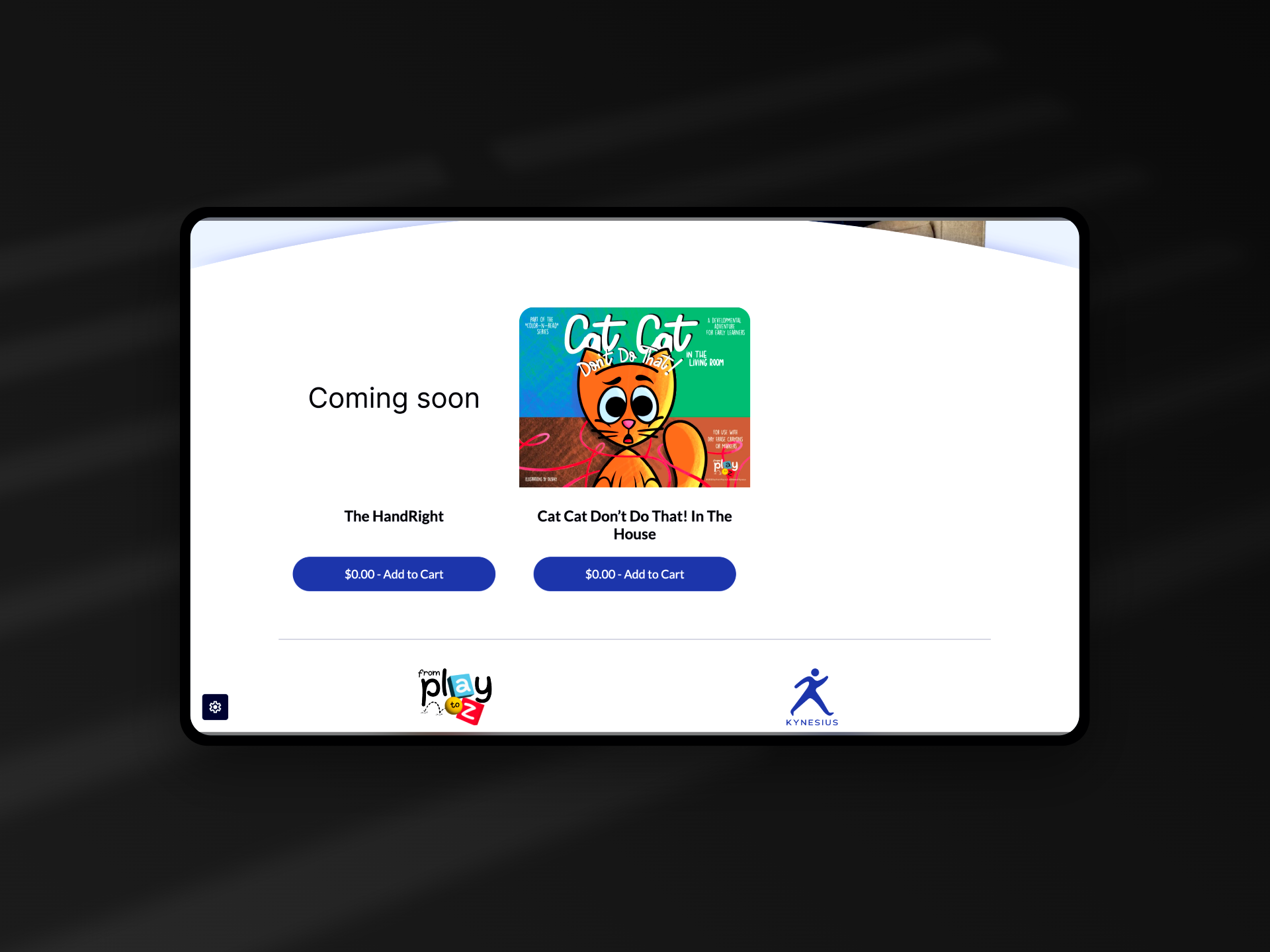
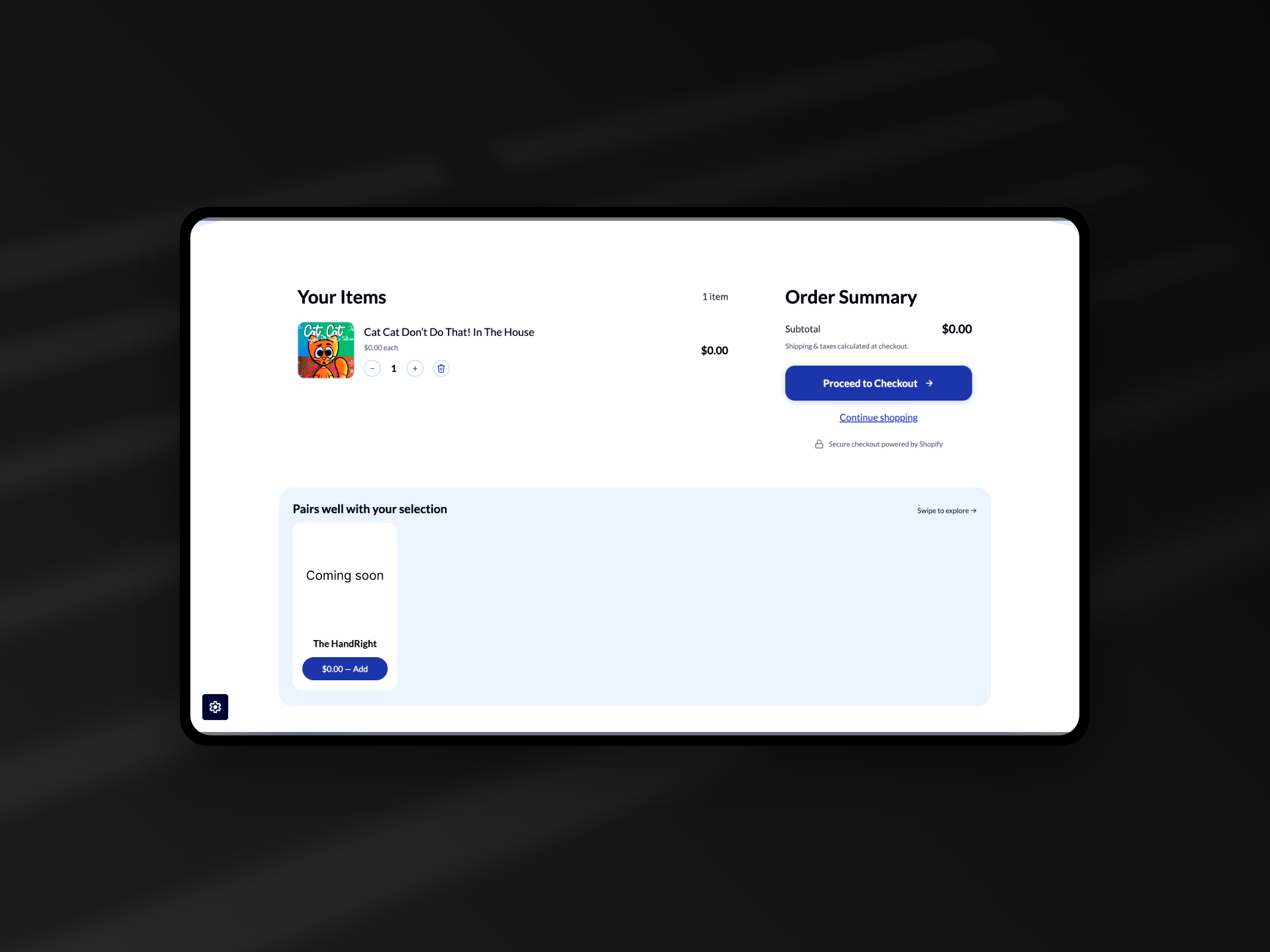
E-commerce added a second constraint. The client wanted a fully custom purchase experience — their own cart interface, their own upsell logic, their own product pages — without WooCommerce. Shopify would handle payments and inventory. WordPress would control everything the customer sees.
Business Goals
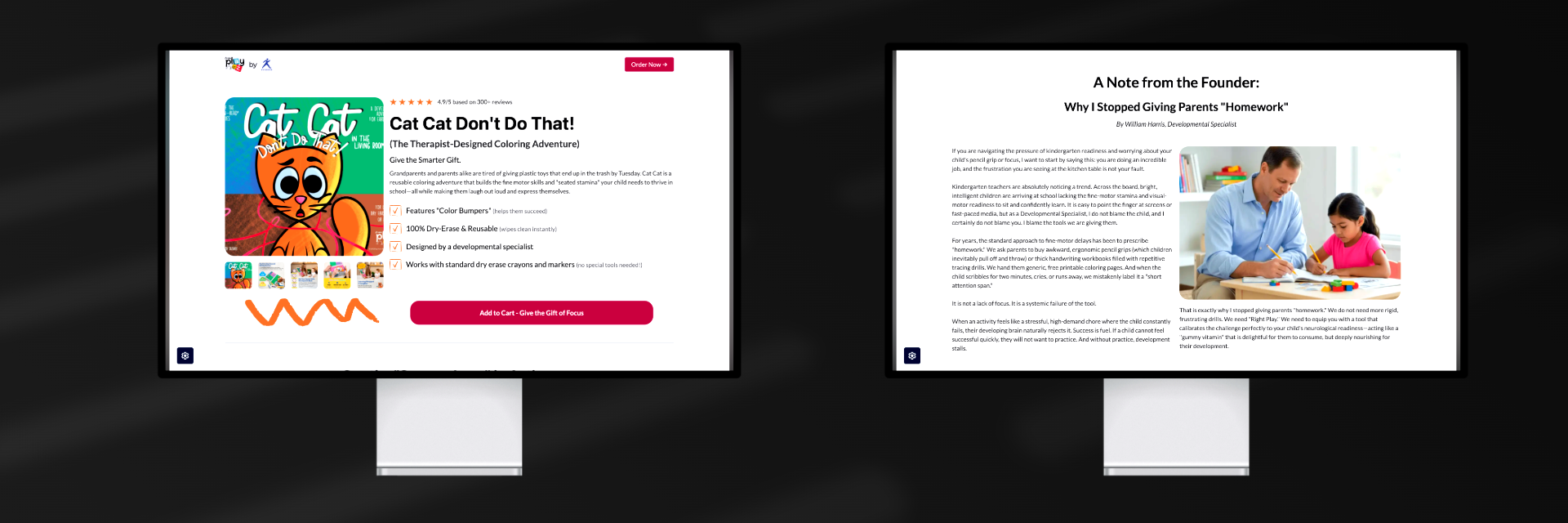
Three commercial objectives drove the build. Direct product revenue through a headless Shopify cart — complete with a custom cart drawer, animated header badge, and configurable upsell product pairings. SEO-driven content growth via the FPTZ blog, resource archive, and category structure, converting organic traffic into product awareness. Paid traffic conversion via dedicated advertorial page templates — stripped of navigation, loaded with direct CTAs, tracked with Microsoft Clarity heatmaps.
Both brands needed to run independently within the same admin. Non-technical editors needed full control over content, product pairings, and resource uploads without touching code. All editorial structure was exposed through ACF options pages, not hardcoded in PHP.
Solution Overview
A single custom WordPress theme built from scratch, governing two complete brand identities. Template selection, menu registration, header behavior, footer content, and ACF field groups are all branched per-brand in PHP — no shared styling was unintentional. FPTZ receives its own homepage, blog archive, shop, resource hub, testimonials, and advertorial templates. Kynesius receives its own corporate pages and contact structure.
E-commerce runs through the Shopify Storefront API via GraphQL. Products are fetched and cached directly in the WordPress database, refreshed by a background WP-Cron job. NitroPack handles full-page caching and purges automatically when Shopify data changes. The cart is entirely custom vanilla JavaScript with zero external dependencies. Klaviyo is integrated directly into WordPress for email capture and marketing automation.
- WordPress
- PHP
- Shopify API
- Tailwind CSS
- Klaviyo
- ACF
- NitroPack
Key Technical Features
The dual-brand architecture is the structural foundation: one WordPress install, two complete brand experiences, zero code duplication — templates, menus, and ACF fields branched per-brand in PHP. The headless Shopify cart runs entirely in vanilla JS: create, add, update, and remove operations, an animated header badge, and a configurable upsell carousel driven by Product Pairings set in the ACF Theme Options page. Advertorial mode is automatic: when WordPress detects an advertorial template, the header switches to its minimal variant with no navigation and a direct CTA. The Printable Sheets custom post type has its own taxonomy, sticky archive filter, and custom fields for difficulty, age range, and PDF download link. Every editorial field across both brands is registered in PHP via ACF — the theme's structure lives in code, not the database.
- Dual-brand single install — two complete brand identities, one WordPress codebase, zero code duplication
- Headless Shopify cart in vanilla JS — configurable upsell pairings, animated badge, no WooCommerce
- Advertorial page templates with automatic minimal-header detection for paid traffic conversion
- Printable Sheets CPT with taxonomy, sticky archive filter, difficulty/age metadata, and PDF download
- Zero-latency caching — Shopify data pre-cached in WordPress DB, NitroPack full-page cache with automatic stock-change purge
Development Environment
WordPress with PHP for all server-side logic. ACF registered entirely in PHP for all custom editorial fields; Contact Form 7 for forms. Shopify Storefront API via GraphQL for all product data. TailwindCSS 3 with a fully custom palette — no default utilities shipped to production. Laravel Mix 6 (Webpack) for asset compilation. Vanilla JavaScript throughout with zero external JS dependencies. NitroPack for production full-page caching. Microsoft Clarity for behavioral analytics. BrowserSync for local development.
Performance & Security Optimizations
The caching architecture eliminates live API calls from the request path. Shopify product data is fetched by a background WP-Cron job and stored in the WordPress database — NitroPack serves any product page from full-page cache without a single Shopify API call at request time. A manual cache refresh is available in the admin but restricted to the manage_options capability. TailwindCSS is purged at build time; only classes used in PHP and JavaScript reach production. Assets are versioned automatically from the stylesheet header for cache-busting on every deploy.
All dynamic output is escaped throughout: esc_html, esc_url, esc_attr, and wp_kses_post. Every include file carries an ABSPATH guard. The Shopify Storefront Access Token exposed to the frontend is public-safe by design — it carries no write permissions beyond cart operations.
Development Process
Built as a single coherent custom theme across PHP, CSS, and JavaScript — no page builders, no commercial theme frameworks. Development ran across two parallel tracks: the Kynesius corporate brand and the FPTZ consumer brand, built simultaneously within the same codebase. Feature work followed a deliberate sequence: core template architecture first, then brand branching, then ACF field structure, then e-commerce integration, and finally the caching layer. Laravel Mix handled asset compilation; BrowserSync enabled rapid local iteration throughout.
Results & Impact
Kynesius runs two brands from one admin, sells through Shopify without WooCommerce, and converts paid traffic through purpose-built advertorial pages — all from a single custom WordPress theme with no commercial framework underneath it. Editorial control is total, caching is aggressive, and neither brand knows the other exists.
— Ready to build?